The Business of Well-Being: How Longevity is Transforming Luxury Hospitality
INSPIRE Prague 2025
The pursuit of health has rapidly evolved from a niche lifestyle choice into a staggering $1 trillion global market. For the luxury hospitality sector, this represents a fundamental shift in consumer behavior. Guests are no longer simply seeking accommodation; they are demanding environments that actively optimize their physical, mental, and emotional well-being.
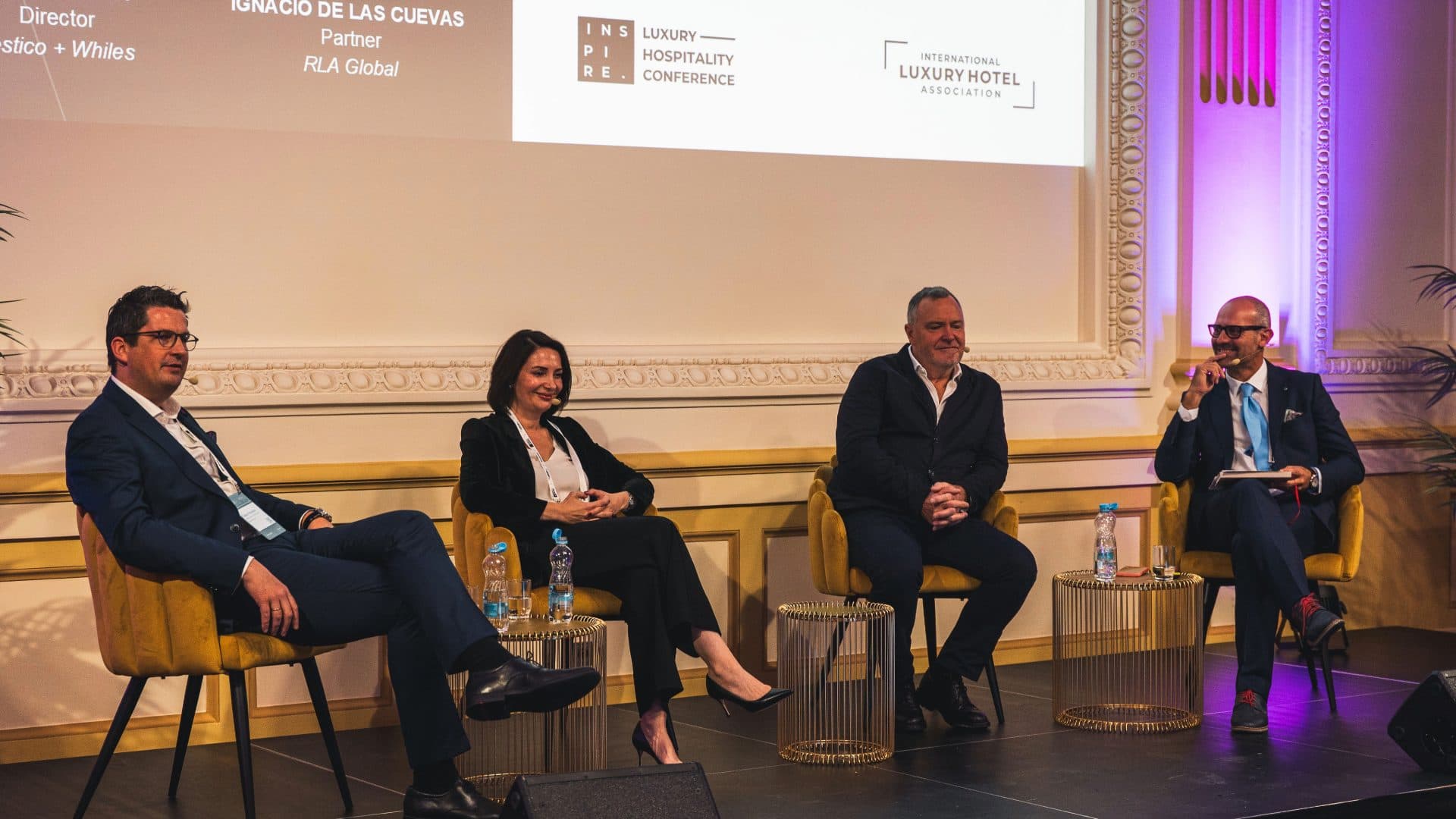
The session "How the Longevity Economy is Transforming Luxury Hospitality" unpacked the profound operational and design implications of this shift. Moderated by Ignacio de las Cuevas, Partner at RLA Global, the panel brought together diverse expertise to debate how hotels can authentically integrate longevity without losing the soul of hospitality
The panel featured:
- Deniz Dorbek, Founder, Regulous Collective
- James Dilley, Director, Jestico + Whiles
- Caspar C. Wesener, General Manager, Maison Messmer Baden-Baden
The Data Behind the Demand
The session opened with a compelling financial reality check. Presenting data from RLA Global’s mid-year 2025 wellness real estate report, de las Cuevas demonstrated that longevity is not just a marketing buzzword, it is a major driver of revenue.
According to the data, properties classified as offering "major wellness" command a TrevPAR (Total Revenue Per Available Room) of $561, nearly 70% higher than minor wellness properties. Furthermore, the luxury segment of major wellness properties shows exceptional resilience, commanding an impressive 84% premium over upper-upscale properties.
However, de las Cuevas highlighted a crucial insight for developers hesitant to build massive, capital-intensive clinics: properly planned minor wellness properties can deliver solid returns, boasting a $71 GOPPAR (Gross Operating Profit Per Available Room) and a robust 5% year-over-year growth. The takeaway is clear: the market rewards intentionality, not just square footage.
Redefining Luxury: From Satisfaction to Alignment
As the definition of luxury shifts, Deniz Dorbek noted that the focus is moving from pure indulgence to alignment. Today’s affluent travelers are armed with data, with 50% of luxury guests utilizing some form of bio-tracking device. The opportunity for hoteliers lies in creating an ecosystem that passively responds to this data.
Dorbek argued that longevity in a hotel room doesn't necessarily mean installing medical equipment. Instead, it involves mastering the room's invisible elements: humidity control, carbon dioxide levels, and circadian lighting. "If you only focus on the lighting in the room and the temperature, you can improve the cognitive skills up to 10 to 12% in 24 hours," Dorbek explained. By optimizing these environmental factors, hotels can give guests the ultimate luxury: a perfect night of restorative sleep.
Neuro-Architecture and the "Pit Stop"
While technology plays a role, James Dilley offered a counterbalance, emphasizing the importance of physical design and "neuro-architecture", designing spaces that optimize cognitive and emotional well-being through biomimicry and natural forms.
In a world bombarded by constant stimuli, Dilley argued that true wellness often requires a complete disconnect. "What people are craving at the moment is... they're on this motorway, this ultimate in life. And actually, you have a pit stop where everything stops all together," Dilley noted.
Dilley highlighted a growing guest desire for authenticity and imperfection. Whether it is picking fresh ingredients from an on-site spice garden in Zanzibar or simply being able to open a window to feel the cold mountain air in Switzerland, guests are seeking a return to primitive, tactile connections with nature that ultra-processed environments cannot provide.
Nailing the Basics and the Human Element
Despite the allure of high-tech biohacking and advanced diagnostics, Caspar C. Wesener issued a stark warning to operators: do not chase advanced longevity trends if you are failing at the fundamentals.
Wesener pointed out the absurdity of spending thousands of dollars on a premium mattress, only to ruin the guest's sleep with beeping red lights from the TV, a flashing smoke detector, and noise bleeding through the hallway from room service. Before offering IV treatments and cryotherapy, hotels must ensure the basic architecture of rest is flawless.
Furthermore, Wesener reminded the audience that while the longevity economy is highly scientific, hospitality remains an art. "We are not a factory and we are not producing new healthy human beings," Wesener stated. "At the end we are hosts... imperfection is so important... I don't know if I'm going to a hotel, my takeaways are always the people who serve me."
As the industry looks to the future, the integration of longevity will require a delicate balance. The most successful properties will use technology to seamlessly and invisibly optimize the physical environment, while relying on their staff to provide the empathy and connection that ultimately defines the luxury experience.